Publications
About Our Publications
On this page you will find a list of publications by ISPS Affiliates, including peer-reviewed journal articles, policy briefs, and working papers.
When possible, Publications are linked to Projects and Data via the ISPS KnowledgeBase.
| Title | Author(s) |
Discipline |
Publication | Year |
|---|---|---|---|---|
| How Politicians Discount the Opinions of Constituents with Whom They Disagree |
Daniel M. Butler and Adam M. Dynes |
Political Science | American Journal of Political Science | 2015 |
| The Federal Spending Paradox: Economic Self-Interest and Symbolic Racism in Contemporary Fiscal Politics |
Katherine Krimmel and Kelly Rader |
Political Science | American Politics Research | 2017 |
| What Have We Learned about Gender from Candidate Choice Experiments? A Meta-Analysis of Sixty-Seven Factorial Survey Experiments |
Susanne Schwarz and Alexander Coppock |
Political Science | Journal of Politics | 2022 |
| Targeted Campaign Appeals and the Value of Ambiguity |
Eitan D. Hersh and Brian F. Schaffner |
Political Science | Journal of Politics | 2013 |
| Monitoring Bureaucratic Compliance: Using Field Experiments to Improve Governance |
Daniel M. Butler |
Political Science | Public Sector Digest | 2010 |
| Perceptions of Program Abuse and Support for Social Insurance |
Scott E. Bokemper, Albert H. Fang, and Gregory A. Huber |
Political Science | American Politics Research | 2020 |
| Price and Party: The Importance of Partisanship and Cost in American Climate Public Opinion |
Eric G. Scheuch |
Political Science | PLOS Climate | 2024 |
| Policy Misperceptions and Support for Gun Control Legislation |
Peter M. Aronow and Benjamin T. Miller |
Political Science | The Lancet | 2016 |
| Does Incarceration Reduce Voting? Evidence about the Political Consequences of Spending Time in Prison |
Alan S. Gerber, Gregory A. Huber, Marc Meredith, Daniel R. Biggers, and David J. Hendry |
Political Science | Journal of Politics | 2017 |
| Explaining Support for Combatants during Wartime: A Survey Experiment in Afghanistan |
Jason Lyall, Graeme Blair, Kosuke Imai |
Political Science | American Political Science Review | 2013 |
| The Internet's Effect on Women's Coauthoring Rates and Academic Job Market Decisions: The Case of Political Science |
Daniel M. Butler, Richard J. Butler |
Political Science | Economics of Education Review | 2011 |
| Adaptive Experimental Design: Prospects and Applications in Political Science |
Molly Offer‐Westort, Alexander Coppock, Donald P. Green |
Political Science | American Journal of Political Science | 2021 |
| It's Largely a Rigged System: Voter Confidence and the Winner Effect in 2016 |
Betsy Sinclair, Steven S. Smith, and Patrick D. Tucker |
Political Science | Political Research Quarterly | 2018 |
| Why Vote with the Chief? Political Connections and Public Goods Provision in Zambia |
Kate Baldwin |
Political Science | American Journal of Political Science | 2014 |
| Which Elections Can Be Lost? |
Susan D. Hyde and Nikolay Marinov |
Political Science | Political Analysis | 2012 |
| The Observer Effect in International Politics: Evidence from a Natural Experiment |
Susan D. Hyde |
Political Science | World Politics | 2007 |
| The Economic Origins of Authoritarian Values: Evidence From Local Trade Shocks in the United Kingdom |
Cameron Ballard-Rosa, Mashail A. Malik, Stephanie J. Rickard, and Kenneth Scheve |
Political Science | Comparative Political Studies | 2021 |
| Congressional Fundraising Dynamics and Their Implications for Problem-Solving |
Brandice Canes-Wrone |
Political Science | ISPS working paper | 2025 |
| Recent Advances in the Science of Voter Mobilization |
Donald P. Green, Alan S. Gerber |
Political Science | Annals of the American Academy for Political and Social Science | 2005 |
| Should I Cast an Ill-Informed Ballot? Examining the Contours of the Normative Obligation to Vote |
David Doherty, Conor M. Dowling, Alan S. Gerber, and Gregory A. Huber |
Political Science | American Politics Research | 2019 |
ISPS Working Paper Series
ISPS advances interdisciplinary research in the social sciences that aims to shape public policy and inform democratic deliberation. The ISPS network includes scholars and students from many departments in the Faculty of Arts and Sciences and from Yale’s graduate and professional schools as well as select experts from other institutions. The ISPS Working Paper Series provides a platform for ISPS affiliates to make their work available for public consumption and discussion.
Featured Books by ISPS Faculty
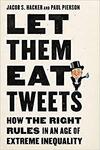

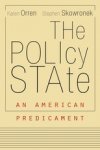
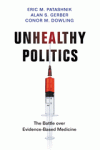
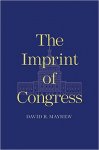

ISPS Sponsored Publications
ISPS Politics & Policy Book Series: A series striving to place policy- and law-making in historical and comparative perspective, reflecting the broad, multidisciplinary character of ISPS.

ISPS Journal: A biannual publication that serves to highlight ISPS scholars’ publications and as a development piece for foundations and interested donors.
GOTV website: A website compiling results from a wide array of voter mobilization field experiments. Findings from these scientifically measured studies of various Get-Out-the-Vote methods offer valuable insight into which methods are most effective in mobilizing voter turnout (Note: the website indexes GOTV experiments published before 2006).
The Bulletin of Yale University includes several issues devoted to ISPS (PDF): 2000-2002, 2002-2004, 2004-2006, and 2006-2008.