Team directory
Team directory

Abbe Gluck, Alfred M. Rankin Professor of Law and Faculty Director of the Solomon Center for Health Law and Policy; Professor of Internal Medicine (General Medicine)
Abbe R. Gluck is the Alfred M. Rankin Professor of Law and the founding Faculty Director of the Solomon Center for Health Law and Policy at Yale Law School. She is also Professor of Internal Medicine (General Medicine) at Yale School of Medicine and a Professor in the Institution for Social and Policy Studies at Yale.

Pamela Greene, Senior Administrative Assistant
Office Location: 77 Prospect Street
Phone: 203-432-3052
Email: pamela.greene@yale.edu

Jacob Hacker, Stanley B. Resor Professor of Political Science

Allison Harris, Assistant Professor of Political Science
Allison P. Harris is an assistant professor of political science at Yale University and a resident faculty fellow at the Institution of Social and Policy Studies. She conducts research in American politics with a specialization in law and courts. Professor Harris’ current research agenda investigates the ways in which institutional change affects disparities in institutional outcomes, specifically within the criminal legal system.

Rick Harrison, Communications Officer
Office Location: 24 Hillhouse Avenue
For media inquiries, please contact Rick at rick.harrison@yale.edu or 203-432-6052.

Elsa Holahan, ISPS Director's Fellow, 2026
Elsa Holahan is a junior in Timothy Dwight College studying American Studies. Her policy interests include prisons, policing, and surveillance; and alternatives to carceral systems. On campus, Elsa is an Academic Strategies Mentor with the Yale Prison Education Initiative, and a Mellon Mays and Edward A. Bouchet Fellow. She also serves as a Co-Chair on the New Haven Democratic Town Committee representing Ward 22.

Daniel HoSang, Professor of Ethnicity, Race, and Migration and American Studies
Daniel Martinez HoSang is Professor of Ethnicity Race and Migration and American Studies and holds a secondary appointment in the Department of Political Science and serves on the Education Studies Advisory Committee.
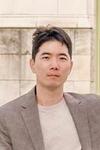
Yuan Hsiao, Assistant Professor of Sociology
Yuan Hsiao’s major research explores the intersection of digital media, social networks, and collective action. His research brings a network perspective to understanding questions pertinent to a variety of online and offline social processes. Examples include how networks on social media contribute to political mobilization, how gang members engage in online and offline conflict relationships, how personal relationships affect the spread of religion, or how community networks affect health behavior.

Melody Huang, Assistant Professor of Political Science and Statistics & Data Science
Melody Huang is an assistant professor of political science and statistics & data science. Her research sits at the intersection of statistics and political science. Her work focuses on developing robust statistical methods to credibly estimate causal effects under real-world complications.

Gregory Huber, Forst Family Professor of Political Science; Director, ISPS Behavioral Lab
Gregory Huber, Ph.D., Princeton University 2001, is the Forst Family Professor of Political Science, a resident fellow of the Institution for Social and Policy Studies, associate director of the Center for the Study of American Politics, and founding director of the ISPS Behavioral Research Lab. He is a fellow of the American Academy for Arts and Sciences.